
Making Space That Works in Your Kitchen
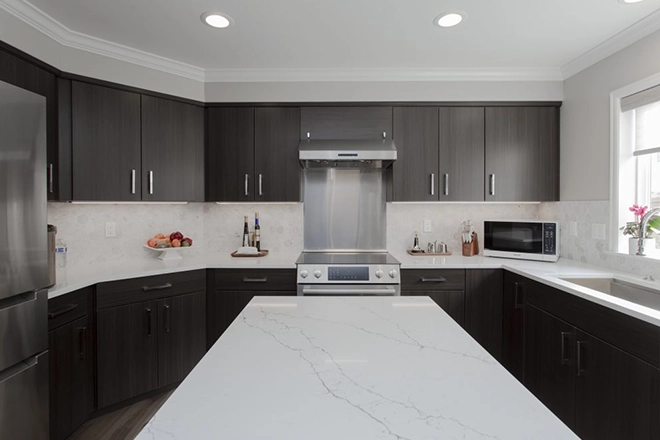
Ever found yourself shimmying sideways past a kitchen island while someone else is chopping veggies? Or had to do the “oven door shuffle” just to get a casserole in?
In this post, you’ll learn the minimum walkway widths every kitchen should have, how to tell the difference between walkways and work aisles, and how to adapt your layout if you’re working with a tight space.
By the end, you’ll know how to design your kitchen remodel so it feels bigger, flows better, and doesn’t leave you trapped between the fridge and the stove.
Key Points
- 36 inches is the bare minimum for kitchen walkways. For better comfort and flow, 42 inches or more is often recommended.
- Work aisles need more space than walkways. If you’re cooking solo, 42 inches will do. If you’re cooking with a partner, bump that up to 48 inches.
- Appliances and seating impact your clearances. Always factor in door swings and chair space when planning your layout, or you’ll run into trouble when the kitchen gets busy.
What Is the Minimum Walkway Width in a Kitchen?
The minimum walkway width in a kitchen is 36 inches. This ensures safe and functional movement, especially behind islands or between cabinets and walls. For more comfort in open layouts, increase the walkway to 42 inches or more to allow easy passage even when appliances are open.
Home Run Solutions’ Approach to Kitchen Walkway Sizing
Regardless of the square footage, a good floor plan will allow people to move comfortably through the space.
My rule of thumb is to keep a minimum of 42″ between counter edges. This magic number is a good rule to allow two people to easily navigate in the work aisles of the kitchen without having to bear hug on the way by.
The counter-to-counter work space should not be confused with a general walkway in which the flow of traffic can pass through the kitchen freely while bypassing the work aisles. The minimum width of the walkway should be 36″ (more space is always better if possible).
I often use this formula and determine that a permanent island is not the best choice for the kitchen, and we look to explore other options for a useful countertop workspace. Rollaway islands or counter bump-outs have been unique solutions that have not taken away from the kitchen’s minimum rule of 42″ of counter-to-counter space.
Contact us today about your kitchen remodel.
Work Aisles vs. Walkways: Why It Matters
Not all spaces in your kitchen serve the same purpose. Understanding the difference between walkways and work aisles is key to creating a kitchen layout that flows and feels spacious.
Work Aisles
Work aisles are the areas between cooking surface appliances, kitchen countertops, or kitchen islands where active prep, cooking, or cleanup happens.
If you’re planning a kitchen island, make sure there’s adequate space on both sides so that traffic passes comfortably even when appliances are in use.
Minimum aisle width recommendations:
- 42 inches for one cook.
- 48 inches or more for multiple cooks.
- Always account for open doors from the oven, dishwasher, or refrigerator.
You’ll also want to know about the kitchen work triangle.
Walkways
Walkways are meant for foot traffic through the room, not for prepping or cooking. These paths should stay clear and open, especially in smaller kitchens where space is already tight.
Walkway spacing tips:
- 36 inches minimum space.
- Widen walkways near exterior doors or high-traffic entries.
- Avoid corner cabinets or sharp edges jutting into the path.
How Appliances and Seating Affect Walkway Width
Appliance Clearance
Appliances don’t just take up space when they’re closed—they need extra room to open fully and still allow someone to walk past.
Always measure from the nearest edge of the open door to the nearest cabinet or kitchen countertop.
Plan for appliance door clearance:
- Side-by-side refrigerator: needs more front clearance than a standard model.
- Dishwasher: requires 21 to 24 inches of clearance to load easily.
- Oven: the doors often extend 20 inches or more when open.
Seating Zones and Dining Areas
Kitchen islands or peninsulas with seating can shrink usable walking space if not laid out carefully.
Stools and chairs should never block cooking surface zones or interfere with the work triangle.
Allow for proper clearance behind seating:
- 32 inches behind a seated diner when no foot traffic is expected.
- 36 to 44 inches if traffic passes behind the chairs.
- Check drawer frontage and cabinet depth to avoid collisions.
Small Kitchens, Big Adjustments
Design Tweaks for Tight Spaces
When square footage is limited, every inch counts.
Adjust your kitchen layout to keep things open without sacrificing storage or counter space.
Smart layout changes:
- Use a mobile or narrow kitchen island to protect the walkway width.
- Choose slim-depth appliances or reduce the cabinet depth on one wall.
- Skip bulky furniture or oversized cooking surface appliances.
Smart Use of Storage
Creative storage makes a small kitchen feel bigger. Think vertically and choose fixtures that work with tight layouts instead of against them.
Storage upgrades that protect walkways:
- Add wall-mounted racks and tall shelving units.
- Use drawer frontage instead of swing-out cabinet doors.
- Place the trash can in an accessible but low-traffic zone.
How else to design your kitchen to fit your lifestyle.
Accessibility and Code Considerations
Universal Design and Wheelchair Access
Designing for mobility means planning for more generous clearance.
Cooking surface appliances, counter space, and storage areas should all be easily accessible from a seated position.
Accessibility must-haves:
- 40 to 48-inch-wide walkways for wheelchair use.
- Avoid placing the sink or stove in tight traffic areas.
- Ensure all major kitchen appliances are easily accessible.
Code Compliance
Some clearance rules are more than just suggestions—they’re part of your local building code. Follow both national kitchen and local code guidelines to avoid setbacks during remodeling.
Check for required clearances:
- Building code fire safety around cooking surface appliances.
- National Kitchen and Bath Association spacing standards.
- Permit and inspection requirements in your area.
Common Kitchen Spacing Mistakes to Avoid
A kitchen might look great on paper, but still fall short in real life. Here are a few layout traps that are easy to fall into and how to dodge them.
Design pitfalls to watch out for:
- Forcing in a kitchen island where there isn’t enough space.
- Overlapping appliance doors that block walkways or cabinets.
- No clearance to walk past someone at the sink or stove.
FAQs About Kitchen Spacing
1. How does the overhang of countertops affect walkway width?
Countertop overhangs reduce walkway width by 1 to 1.5 inches per side. A 42-inch walkway measured from cabinet face to face becomes about 39 inches when overhangs are included.
2. What is the recommended clearance between a kitchen island and surrounding countertops?
Maintain at least 42 inches of clearance between a kitchen island and surrounding countertops. Increase to 48 inches if multiple people use the kitchen or if appliance doors open into the walkway.
3. How do perpendicular walkways impact kitchen traffic flow?
Perpendicular walkways affect traffic flow by requiring wider clearance at intersections. One walkway should be at least 42 inches wide to avoid congestion.
Walk This Way: Kitchen Remodeling by Home Run Solutions
If your kitchen feels like a tight squeeze or just doesn’t flow the way it should, Home Run Solutions can help you open it up. We design and remodel kitchens across western Washington that don’t just look great but function better for how you really move, cook, and live.
If you’re ready to stop sidestepping your layout problems, fill out our contact form today or give us a call. Let’s make a space that works for you, your family, and everyone who walks through your kitchen.