
Knock, Knock! Let’s Talk Bathroom Doors
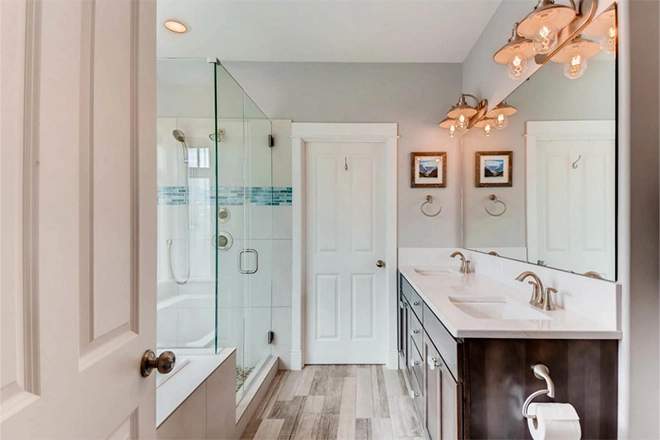
Ever squeezed through a too-narrow bathroom door while juggling products or dodging a curious toddler? Wondering if your current door would be a dealbreaker for future buyers or even your future self with a walker?
In this post, you’ll learn what the standard bathroom door sizes are, how to choose the right one for your space, and why door placement matters more than you think.
By the end, you’ll know what size bathroom door you need for your bathroom remodel.
Key Points
- Standard Widths Vary Based on Layout: While 32 inches of clear opening is ideal, bathrooms in tighter spaces can work with doors as narrow as 24 inches.
- Accessibility Adds Value: A 36-inch-wide door allows for wheelchair access, improves resale potential, and just makes everyday movement easier.
- Swing, Slide, or Glide: From barn doors to pocket sliders, the right style of door can save space and improve function without sacrificing looks.
What Is the Standard Size for a Bathroom Door?
The standard bathroom door size is 30 to 34 inches wide and 80 inches tall. For accessibility, a 36-inch width is recommended. Newer homes often require a 34-inch door to provide a 32-inch clear opening. Older or smaller bathrooms may use 24- or 28-inch doors, but these are less suitable for aging-in-place or resale.
Our clients often ask, “How wide should the door into their new bathroom be?” To that question, the answer depends on how much space is available.
Contact us today about your bathroom remodel.
Minimum Size and Accessibility Guidelines
NKBA Guidelines
The National Kitchen and Bath Association recommends a minimum clear opening of 32 inches, which requires at least a 34-inch-wide door.
This extra width makes movement easier and improves the room’s flow, especially for families or frequent guests.
In a perfect world, the clearer the entry space into the bathroom, the better.
ADA Requirements
A 36-inch bathroom door width provides a clear opening wide enough for wheelchairs or walkers.
Remodel vs. New Build Rules
Existing door sizes may not need to be updated unless they’re being relocated.
If you’re planning a new door, though, you’ll need to follow current code.
When Narrow Doors Make Sense
Space-Constrained Layouts
Bathroom layouts are rarely perfect.
If your remodel is boxed in by walls or plumbing, a smaller door might be necessary, but you still have options.
While a 24-inch door size is considered the minimum for most tight spaces, installing pocket doors or sliding doors can help maximize usable floor space.
If space is tight, then the minimum allowance is for a 2’0 door. In these situations, we like to explore other entry options such as a pocket door or even a bypass door mounted on decorative barn-style rails that affix to the exterior wall.
How to ensure your bathroom has enough space.
Powder Rooms and Secondary Baths
Powder rooms or guest bathrooms often allow for more flexibility.
Since they’re not usually part of a daily routine, a smaller standard door size can work here without too much compromise. Just keep in mind that narrower door widths can limit usability for older guests or future homeowners.
Factors That Affect Your Door Size Choice
Fixture and Door Interference
Choosing the right bathroom door size isn’t just about width.
You also need to think about layout, fixture clearance, and how the door interacts with everything around it.
Door swing is one of the most common challenges.
The door shall not interfere with another door or the safe use of fixtures within the bathroom.
The same holds true for a swinging shower door; it should swing outward, without obstruction.
Plumbing and Wall Layouts
In some layouts, it may be more effective to reverse the door swing or reduce the vanity size to gain better clearance. If you’re constrained by existing plumbing or framing, a slightly smaller door may be the best fit.
Aesthetic Consistency
Many homeowners prefer to keep all interior doors the same height and similar widths for a clean, cohesive design. That consistency across bathrooms, bedrooms, and closets adds to the home’s visual flow and resale appeal.
Building Codes and Safety Considerations
IRC (International Residential Code)
Most local building inspectors follow the International Residential Code, which does not define a minimum bathroom door width. However, when installing a new door, expect to follow local interpretations of national guidelines.
Ventilation and Clearance Regulations
Every bathroom should have mechanical ventilation or a window to reduce high humidity and prevent moisture damage.
There also needs to be at least 21 inches of floor space in front of toilets and sinks for safe movement in and out of the room.
Other considerations to keep in mind for your bathroom remodel.
Types of Bathroom Doors and Style Options
Swinging Doors
Swinging doors are the default in most homes, especially where space allows. They’re familiar, reliable, and easy to install, but they need plenty of clearance for full movement.
Pocket and Sliding Doors
If you’re limited on floor space, pocket doors or barn-style sliding doors can be game changers.
These solutions take away any door swing allowance and create a larger clear passage space in and out of the bathroom.
The door itself should be a solid core or solid panel door, not a hollow core model.
The weight of a solid door will actually improve the motion on the track and give a more substantial feel as it glides back and forth.
Extra Design and Daily Use Considerations
Light Switch Placement
You might not think about the light switch until you’re fumbling in the dark.
The best location is opposite the hinge side of the door, inside the bathroom.
Many homes have the switches located somewhere on the outside of the bathroom, and in these scenarios, I encourage the homeowner to allow us to relocate the switches to the interior for the safety and convenience of the person who is actually using the bathroom.
Durability and Wear
If you have kids in the home, be sure that the door you choose is built sturdy, as it seems to be the most slammed, fist-pounded, kicked, and yelled through door in the house.
It needs to be bold to stand up to the use and abuse that will come at it.
FAQs About Bathroom Doors
1. Why are bathroom doors often narrower than other interior doors?
Bathroom doors are often narrower to save space and improve layout efficiency. Bathrooms are usually smaller and don’t require large furniture to pass through. A narrower door maximizes usable interior space while still allowing easy access for a single person.
2. What is the standard thickness for bathroom doors?
The standard thickness for a bathroom door is 1⅜ inches. This size offers a balance of durability and weight, making it suitable for regular use and compatible with standard door frames. Some custom or older homes may have doors up to 1¾ inches thick.
3. How do I measure for a new bathroom door if my current opening isn’t a standard size?
Measure for a new bathroom door by checking the width at the top, middle, and bottom, and recording the smallest value. Measure height on both sides, check for squareness diagonally, and consider floor height and standard door thickness. Use a custom door if standard sizes don’t fit.
Open the Door to New Possibilities with Home Run Solutions
Whether you’re planning a total remodel or just widening your bathroom doorway, Home Run Solutions has the experience to make every detail count. From standard door sizes to custom layouts, we help homeowners throughout Western Washington create bathrooms that feel open, functional, and built for the future.
If you’re ready to upgrade your bathroom with smarter design choices and better access, fill out our contact form today or give us a call. We’ll help you find the perfect fit.